



Pineapple Coconut Mousse Cake has three distinct layers: a soft vanilla sponge, a light coconut mousse with crushed pineapple, and a shiny golden pineapple glaze. The glaze is the part that makes it look bakery-made, but the real appeal is texture. You get something spongy, something creamy, and a jiggly top layer that just barely holds its shape.
The base version is worth making as written first. The pineapple in the mousse keeps the coconut from tasting flat, and the glaze carries the pineapple flavor all the way through. It is chilled, so it feels right even when the kitchen is hot.
Why the Base Version Works
The sponge is plain vanilla on purpose. It gives structure but does not compete with the coconut and pineapple. The mousse is made with both heavy cream and coconut cream. Heavy cream whips into a stable foam, while coconut cream brings fat and flavor. Gelatin holds the mousse so it slices cleanly instead of oozing. The glaze uses pineapple juice and sugar, so it tastes bright, not just sweet.
The whole thing is built in one 8-inch round cake pan. That keeps the mousse contained until it sets, and it means you do not need any special rings or molds.
Ingredient Notes That Matter
Coconut cream is the ingredient most likely to cause confusion. You want unsweetened full-fat coconut cream, not cream of coconut. Cream of coconut is sweetened and syrupy, and it will throw off the texture and sweetness. If you only have full-fat coconut milk, use the thick part from the top of the can and expect a slightly softer set.

The crushed pineapple must be drained well. Press it with a spoon or squeeze it in a clean cloth. Too much juice will loosen the mousse and make it watery at the bottom.
Use unflavored powdered gelatin and bloom it in cold water before it touches anything warm. This keeps it from clumping. Once the coconut mixture is warm, stir in the bloomed gelatin until it feels smooth. If you see little granules, keep stirring over low heat.
For the sponge, softened butter and room-temperature eggs mix more evenly. Cold eggs can make the batter look curdled. It usually comes back together when you add flour, but the crumb is more even with warm ingredients.
Building the Base Version Without Losing the Air
The sponge follows the usual butter cake rhythm. Cream butter and sugar until it looks pale and fluffy, then add eggs one at a time. Alternate the dry ingredients with milk, starting and ending with flour. The point of alternating is to keep the batter from becoming too wet or too stiff, which affects how evenly it rises. Stop mixing as soon as the last bit of flour disappears. Bake it until a toothpick comes out clean, about 25 to 30 minutes in an 8-inch round pan.
Cool the sponge completely before the mousse goes on. A warm sponge will melt the whipped cream and the mousse will deflate.
For the mousse, heat the coconut cream and powdered sugar gently. It should be warm enough to dissolve the sugar and gelatin but never boiling. Boiling can reduce the coconut cream and change its flavor. Pour the warm mixture into the whipped cream and fold by hand. Fold with a big spatula, cutting through the middle and turning the bowl. The cream should be at soft peaks, not stiff. Soft peaks hold a gentle curl when the whisk is lifted. If the cream is whipped too far, the mousse becomes dense and harder to spread.
After the pineapple is folded in, pour the mousse over the sponge in the same cake pan. Spread it evenly and refrigerate for at least four hours. The center should feel set, not sloshy, before you add the glaze.
The glaze uses the same gelatin technique. Heat the pineapple juice and sugar until the sugar dissolves, then stir in the bloomed gelatin. Let it cool until it is just warm. If you pour it on hot, it can melt the top of the mousse and create a cloudy layer. A slightly thickened, cool glaze pours more evenly. Chill for one more hour until the top is glossy and firm to the touch.
Four Ways to Change It
Add a Sweet Tart Lemon Curd Layer
I suggest trying a sweet tart lemon curd between the layers. It is a southern staple for coconut cakes. Spread a thin layer of thick lemon curd over the cooled sponge before you pour the mousse. Let it settle in the fridge for 10 minutes so it does not swirl into the mousse. This version leans less tropical and more like a coconut-lemon layer cake. The tartness is a good counterpoint to the rich coconut.
Gluten-Free Sponge
Use a 1:1 gluten-free all-purpose flour blend in place of the wheat flour. The mousse and glaze are already gluten-free. Mix the batter just until combined and let it rest for 10 minutes before baking if the blend contains xanthan gum. The rest of the method stays the same.
No-Bake Shortcut
Skip the sponge entirely. Make the coconut mousse, then layer it in a dish with crisp coconut or vanilla biscuits instead of cake. The biscuits soften as the mousse sets, giving you a similar contrast without turning on the oven. The glaze goes on top just the same.
Lime or Passionfruit Twist
For a sharper tropical flavor, replace about one quarter of the pineapple juice in the glaze with fresh lime juice and add a little lime zest. Or use passionfruit pulp if you can find it. The coconut mousse stays the same.
Which Version to Choose When
Make the base version when you want a real layer cake moment with clean slices. It is the best-looking option for a special meal or when you have time to bake.
Choose the lemon curd version when the crowd likes classic Southern coconut cake flavors. It cuts the sweetness and feels a little more grown-up.
Go with the gluten-free version when someone at the table avoids wheat. No one will miss the regular flour because the mousse and glaze do most of the work.
Use the no-bake shortcut on hot days, busy weekends, or when your oven is full. The lime or passionfruit twist works well when the pineapple flavor needs more edge.
Storage and Serving
Keep the cake covered in the refrigerator between servings. A cake carrier or a loose cover works well, but avoid pressing plastic wrap directly against the glaze if you want it to stay completely smooth. The recipe does not specify an exact storage time, but cakes with whipped cream and gelatin are best eaten within 2 to 3 days. The glaze may soften slightly after the first day and release a little clear liquid. That is normal.
Serve the cake chilled, cut into 12 portions with a thin sharp knife. Wipe the knife between cuts if you want neat slices. Toasted coconut flakes or fresh pineapple slices make a good garnish, but the top is pretty enough without them.
This cake is good with iced tea, cold brew, or a strong hot coffee. If you want the same coconut and pineapple combination with zero baking, try the no-bake coconut pineapple biscuit cake.
Questions That Come Up
Can I use coconut milk instead of coconut cream?
Full-fat coconut milk can work if you chill the can and use only the thick cream that separates from the watery liquid. The mousse will be softer and may not slice as cleanly. Do not use cream of coconut, which is sweetened.
Why did my mousse not set?
Check the gelatin. It needs to bloom in cold water first, then dissolve completely in the warm coconut mixture. If any granules remain, the mousse will have weak spots. Also make sure you refrigerated it for the full four hours. A properly set mousse should be firm enough to hold a glaze but still creamy.
Can I assemble the cake the night before?
Yes. Make the sponge and mousse layer, then refrigerate overnight. Add the glaze the next morning or a few hours before serving and chill for one more hour. You can glaze the night before too, but the top may soften slightly by the next day.
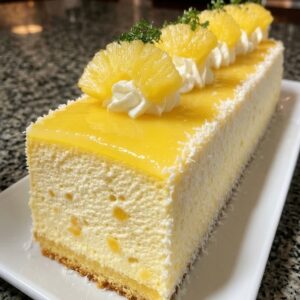
Pineapple Coconut Mousse Cake

Ingredients
For the Vanilla Sponge Base
- 1 cup all-purpose flour 120g
- 1 cup granulated sugar 200g
- 1/2 cup unsalted butter softened (113g)
- 2 large eggs
- 1/2 cup milk 120ml
- 2 tsp baking powder
- 1 tsp vanilla extract
- 1/4 tsp salt
For the Coconut Mousse
- 1 cup heavy cream 240ml
- 1 cup coconut cream 240ml
- 1/2 cup powdered sugar 60g
- 1 tsp vanilla extract
- 1 packet unflavored gelatin about 2 1/4 tsp
- 3 tbsp cold water
- 1 cup crushed pineapple drained (about 180g)
For the Golden Pineapple Glaze
- 1 cup pineapple juice 240ml
- 1/4 cup granulated sugar 50g
- 1 packet unflavored gelatin about 2 1/4 tsp
- 3 tbsp cold water
Instructions
- Preheat the oven to 350°F (175°C). Grease and flour an 8-inch round cake pan.
- Cream the softened butter and granulated sugar until light and fluffy. Add the eggs one at a time, mixing well after each addition, then stir in vanilla.
- In a separate bowl, combine the flour, baking powder, and salt. Add the dry ingredients to the creamed mixture alternately with the milk, beginning and ending with flour. Mix just until combined.
- Pour the batter into the prepared pan and smooth the top. Bake for 25 to 30 minutes, until a toothpick inserted in the center comes out clean.
- Cool the cake in the pan for 10 minutes, then transfer to a wire rack and cool completely.
- For the mousse, bloom the gelatin in 3 tablespoons cold water for about 5 minutes.
- Combine the coconut cream and powdered sugar in a saucepan. Heat over low heat, stirring until the sugar dissolves. Do not boil. Remove from heat and stir in the bloomed gelatin until completely dissolved.
- In a separate bowl, whip the heavy cream to soft peaks.
- Gently fold the coconut mixture into the whipped cream. Fold in the drained crushed pineapple until evenly combined.
- Place the cooled sponge back in the cake pan. Pour the coconut mousse over the sponge and spread evenly. Refrigerate for at least 4 hours, until set.
- For the glaze, bloom the second packet of gelatin in the remaining 3 tablespoons cold water for about 5 minutes.
- Combine the pineapple juice and granulated sugar in a saucepan. Heat over medium heat, stirring until the sugar dissolves. Remove from heat and stir in the bloomed gelatin until completely dissolved. Let the glaze cool slightly.
- Pour the slightly cooled glaze over the set mousse and spread from edge to edge. Refrigerate for another hour, until the glaze is set.
- Slice into 12 portions and serve chilled. Garnish with toasted coconut flakes or fresh pineapple slices if desired.
Notes
Heat the coconut cream and pineapple juice gently; boiling can affect texture and flavor.
The mousse should feel set and not sloshy before the glaze is added.
Store covered in the refrigerator and serve chilled. Best eaten within 2 to 3 days.

