



The step that matters most in this pineapple coconut cake is the one you do before anything goes into the oven: bringing everything to room temperature. Cold butter will not cream properly with sugar. Cold eggs will tighten the batter. Cold buttermilk or sour cream can make the fat seize slightly, and you lose the light, even crumb this cake is built on. Set the butter, egg whites, buttermilk, sour cream, cream cheese, and pineapple juice on the counter a solid hour before you bake. If the kitchen is cool, give it ninety minutes. This single habit changes the texture more than any mixer speed or pan brand.
The combination of pineapple and coconut is a familiar one in Southern baking, where coconut layer cakes have long been a standard celebration dessert. Pineapple often appears in the filling or is folded into the batter for moisture and a gentle tang. This version uses pineapple juice in the cake itself, crushed pineapple in the filling, and a cream cheese frosting pressed with toasted coconut. It is rich, tall, and soft, with a texture closer to a bakery layer cake than a quick loaf.
Why Room Temperature Really Matters
Creaming butter and sugar is not just about mixing two ingredients. The sugar crystals cut into the soft fat and create thousands of tiny air pockets. Those pockets expand in the oven and give the cake lift. If the butter is too cold, it cannot hold those air pockets well. If it is too warm or melted, the structure collapses before the crumb sets. The butter should dent when pressed but still hold its shape. If you forget to take it out early, cut it into small cubes and let it sit for about 20 minutes. Do not microwave it. Partially melted butter is worse than cold butter.
Egg whites at room temperature whip more evenly and fold into the batter without deflating the creamed mixture. Buttermilk and sour cream should also lose the chill so they blend smoothly instead of shocking the batter. The pineapple juice can be set out with everything else. If you drain the crushed pineapple first, you can measure the juice and let it come to temperature while the fruit waits.

Ingredient Notes for a Better Crumb
The formula here leans on a few quiet ingredients doing specific work. Cake flour gives the layers a fine, tender crumb that all purpose flour would make slightly tougher. If you must substitute, measure all purpose flour and remove two tablespoons per cup, but the difference is noticeable in a cake this soft.
Baking powder is the only leavening, and there is a generous amount of it. That is intentional. The batter is heavy with liquid and fat, and the lift needs to be strong enough to carry it. Make sure yours is fresh. A cake that rises in the oven and sinks in the center usually points to old baking powder or an oven running cool.
The coconut extract is the main coconut flavor in the sponge, since the juice alone reads mostly as sweetness. It is potent. The amount called for is enough to register clearly without tasting like suntan lotion. Vanilla rounds it out and keeps the coconut from going flat.
The recipe uses egg whites only, which is worth noting. The cake is pale and light, closer to a fine white cake base than a yellow cake. Save the yolks for another use or discard them. Do not try to add them here, as they change both color and richness.
I found the pineapple overwhelmed by the other flavors when I first made this cake. The juice in the batter and the crushed pineapple in the filling still did not come through as clearly as I expected. If you want more fruit presence, one option worth trying is a sweet tart lemon curd between the layers. Lemon curd is a southern staple with coconut cakes, and its acidity pushes the pineapple forward instead of letting it hide behind the coconut and cream cheese.
Toasting the Coconut Without Burning It
Toasted coconut finishes the outside and adds a layer of flavor through the filling. The method is simple but requires attention. Use a dry skillet over medium heat and stir or toss the coconut continuously. It will look unchanged for the first few minutes, then begin to color quickly. As soon as it turns very light brown, pull it off the heat and spread it on a plate. It continues darkening for a minute from residual heat.
The visual cue is more reliable than a timer. Toasted coconut can go from pale to acrid in under a minute. If some pieces brown faster than others, that is fine. If you smell a sharp, slightly burnt scent, start over. Burnt coconut is bitter and will ruin the frosting.
The Frosting and Filling
The cream cheese buttercream should be mixed before you start the cake layers. It needs time to sit and firm up enough to hold between the layers. The cream cheese and butter must both be room temperature, but not soft to the point of greasiness. Beat them together until smooth before adding liquid or sugar. Once the milk and coconut extract are in, add the powdered sugar gradually. Dumping it all in at once creates a cloud of sugar and a lumpy frosting.
The filling is a lighter layer made from some of that frosting folded with whipped cream, drained crushed pineapple, and toasted coconut. The cold cream needs to be whipped to firm peaks first. Fold gently. The filling should be airy but stable enough not to squeeze out the sides. If it looks loose, refrigerate it for about fifteen minutes before assembling.
Assembling the Cake
The layers should be completely cool before you touch them. A slightly warm cake will melt both the frosting and the filling and slide apart. If you have time, wrap the cooled layers in plastic and chill them for an hour. Cold layers are easier to handle and less likely to tear.
Place the first layer on a serving plate or cake board. Spread the pineapple filling evenly, but stop about a half inch from the edge. The weight of the upper layers will press it outward. Repeat with the second layer. The final layer goes on top, then the outside gets the plain cream cheese buttercream.
A crumb coat is useful here because the toasted coconut covers the outside. Frost the whole cake with a thin layer to trap crumbs, chill it briefly, then add the final coat. Pressing the coconut onto the sides is easier if you hold the plate over a rimmed baking sheet and scoop coconut with your other hand into the frosting. This is messy. It is worth it.
Can You Make It the Night Before?
Yes, and the cake is often better the next day. The layers absorb moisture from the filling, and the coconut flavor settles. Assemble the cake, coat it with the final layer of frosting, and refrigerate uncovered for about half an hour to set the frosting. Then cover it loosely with plastic wrap. Add the toasted coconut right before serving if you want it to stay crisp. If you put the coconut on the night before, it will soften slightly in the fridge. That is not a flaw, but it is better on the day of serving.
How to Store Leftovers
Keep the finished cake in the refrigerator because of the cream cheese frosting and dairy filling. Cover it well so it does not pick up fridge odors. Let slices sit at room temperature for about twenty minutes before serving. The cake itself stays moist for three or four days.
Why Did My Cake Sink in the Middle?
The most common cause is underbaking. The cakes may look set on top and still be wet in the center. Use a toothpick or thin skewer inserted into the middle. It should come out with only a few tender crumbs. If the toothpick has batter on it, give the layers another few minutes. Opening the oven door too early can also cause a sink. Wait until the layers have risen fully and the edges are set before checking.
Why Is My Frosting Runny?
The cream cheese or butter was likely too warm, or the powdered sugar was not fully incorporated before the milk was added. Warm ingredients make a thin frosting that will not hold. Put the bowl in the refrigerator for about twenty minutes and beat it again. If it is still too soft, beat in a little more powdered sugar.
Can I Use a Different Pan?
You can bake this in two 9-inch pans instead of three 8-inch pans. The layers will be thicker, so they need a longer bake time. Start checking at 30 minutes and add time in small increments. The batter also works as cupcakes, though the filling is harder to use there.
Bring the dairy, eggs, and juice to room temperature before you start, and everything else follows more easily.
If you want a lighter, chilled version, try my pineapple coconut mousse cake.
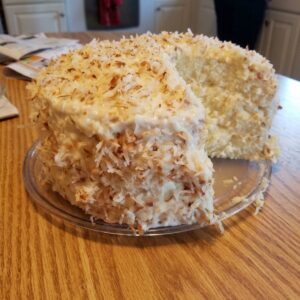
Pineapple Coconut Cake

Ingredients
Cake Batter
- 2 sticks unsalted butter 1 cup / 226 g, room temperature, plus 1 to 2 tablespoons for pans
- 3 cups granulated sugar 600 g
- 5 egg whites room temperature
- 1 1/2 teaspoons pure coconut extract
- 1 1/2 teaspoons pure vanilla extract
- 3/4 cup pineapple juice 180 ml, room temperature, reserved from drained crushed pineapple
- 3/4 cup buttermilk 180 ml, room temperature
- 3/4 cup sour cream 180 g, room temperature
- 5 teaspoons baking powder
- 1/2 teaspoon salt
- 3 cups cake flour 360 g, plus 2 to 3 tablespoons for pans
- 1 20-ounce can crushed pineapple drained, juice reserved
Cream Cheese Buttercream Frosting
- 8 oz cream cheese 226 g, room temperature
- 1 stick unsalted butter 1/2 cup / 113 g, room temperature
- 3 1/2 cups powdered sugar 420 g
- 2 to 3 tablespoons regular milk
- 1 teaspoon pure coconut extract
- 2 cups sweetened shredded coconut 160 g, toasted
Whipped Pineapple Coconut Filling
- 3/4 cup cream cheese buttercream frosting from above
- 1 cup cold heavy cream 240 ml, whipped to firm peaks
- drained crushed pineapple from above
- 3/4 cup toasted sweetened coconut from above
Instructions
- Bring butter, egg whites, buttermilk, sour cream, cream cheese, and pineapple juice to room temperature. Butter and flour three 8-inch round cake pans. Set aside.
- Drain the can of crushed pineapple. Reserve 3/4 cup juice for the cake batter and set the crushed pineapple aside for the filling.
- For the frosting, beat the room temperature cream cheese and butter in a large bowl until smooth and creamy. Blend in 2 tablespoons milk and the coconut extract.
- Mix in the powdered sugar 1 cup at a time, beating until smooth. If the frosting feels thick, add up to 1 more tablespoon milk. Set aside.
- Toast the sweetened coconut in a dry skillet over medium heat, stirring constantly, until very light brown, about 4 to 6 minutes. Spread on a plate to cool.
- Preheat the oven to 350 F, 175 C.
- In a large mixing bowl, beat the butter and granulated sugar until light and fluffy, about 3 to 4 minutes. Beat in the egg whites one at a time. Mix in the coconut extract and vanilla extract.
- In a separate bowl or large measuring cup, whisk together the pineapple juice, buttermilk, and sour cream until smooth.
- In another bowl, whisk the cake flour, baking powder, and salt.
- Add the dry ingredients to the butter mixture in three additions, alternating with the pineapple juice mixture, beginning and ending with the dry ingredients. Mix just until combined after each addition. Do not overmix.
- Divide the batter evenly among the prepared pans. Bake at 350 F, 175 C for 23 to 26 minutes, until a toothpick inserted in the center comes out with a few tender crumbs.
- Cool the layers in the pans for 10 minutes, then turn out onto wire racks to cool completely.
- Make the filling once the layers are cool. Whip the cold heavy cream to firm peaks. In a bowl, fold together 3/4 cup of the cream cheese frosting, the drained crushed pineapple, and 3/4 cup of the toasted coconut. Gently fold in the whipped cream until just combined.
- Place one cooled cake layer on a serving plate. Spread half of the whipped pineapple filling over it, stopping about 1/2 inch from the edge. Top with the second layer and repeat with the remaining filling. Place the third layer on top.
- Frost the top and sides of the cake with the remaining cream cheese buttercream. Press the remaining toasted coconut onto the sides and top. Refrigerate until ready to serve.
Notes
If the filling looks loose, chill it for 15 minutes before assembling.
Leftover cake keeps covered in the refrigerator for 3 to 4 days. Let slices sit at room temperature for 20 minutes before serving.
For a stronger fruit note, add a layer of sweet tart lemon curd between the cake layers.

